
OLED TVs can produce superb contrast, deep blacks and a crisp picture, so screen problems are especially noticeable when something changes.
If the display develops lines, flickering, dark patches or no picture at all, it does not always mean the whole television needs replacing. A proper engineer assessment can often identify whether the issue is truly the panel, or another repairable part.
What counts as an OLED screen fault?
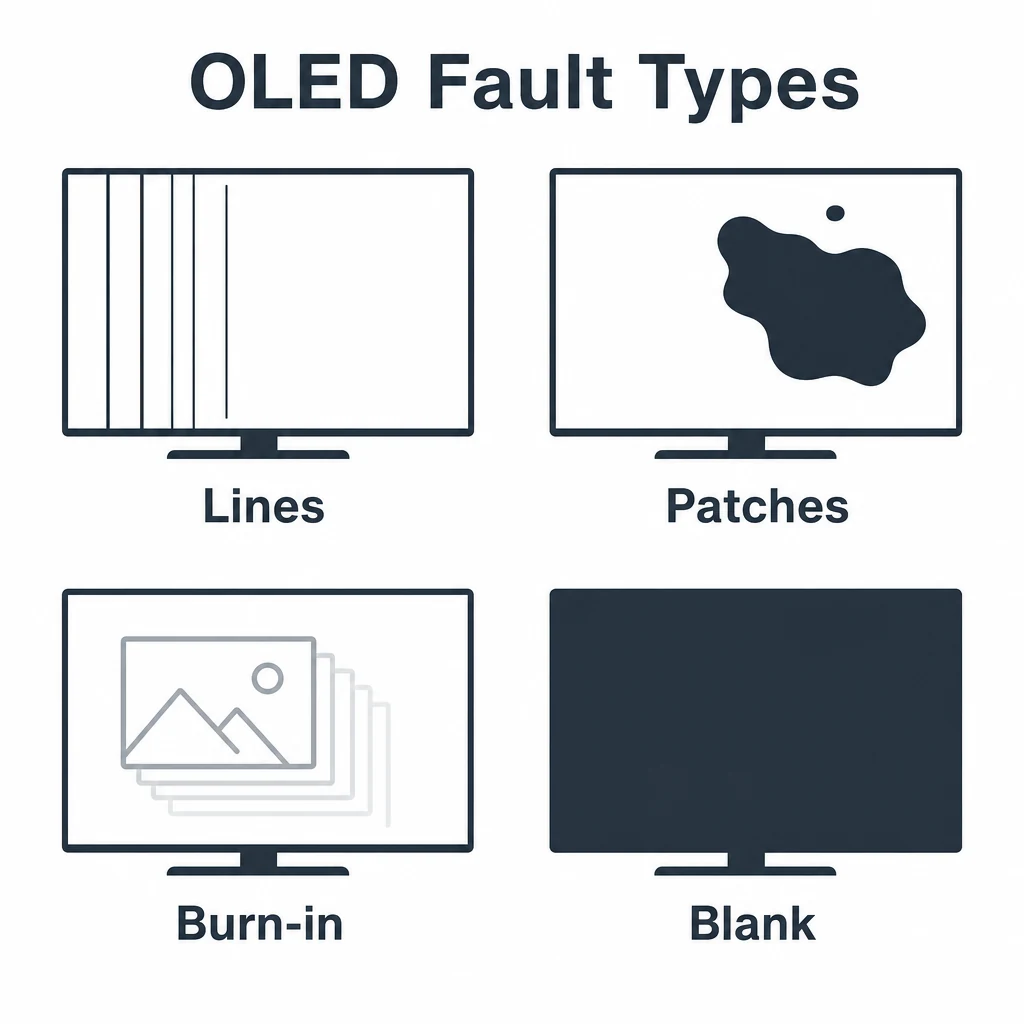
People often use the phrase screen fault for any problem they can see on the display. In practice, a visible picture issue can be caused by the OLED panel itself, the power supply, the main board, internal connections, software or signal processing.
Common OLED symptoms include:
- Vertical or horizontal lines on the picture
- Flickering, flashing or pulsing brightness
- Sound with no picture
- Dark areas, patches or uneven brightness
- Image retention or permanent burn-in
- Cracked glass or impact damage
The first job is to separate what the viewer sees from what has actually failed inside the set. That distinction is what makes professional TV screen repair valuable.
How a TV repair engineer assesses the fault
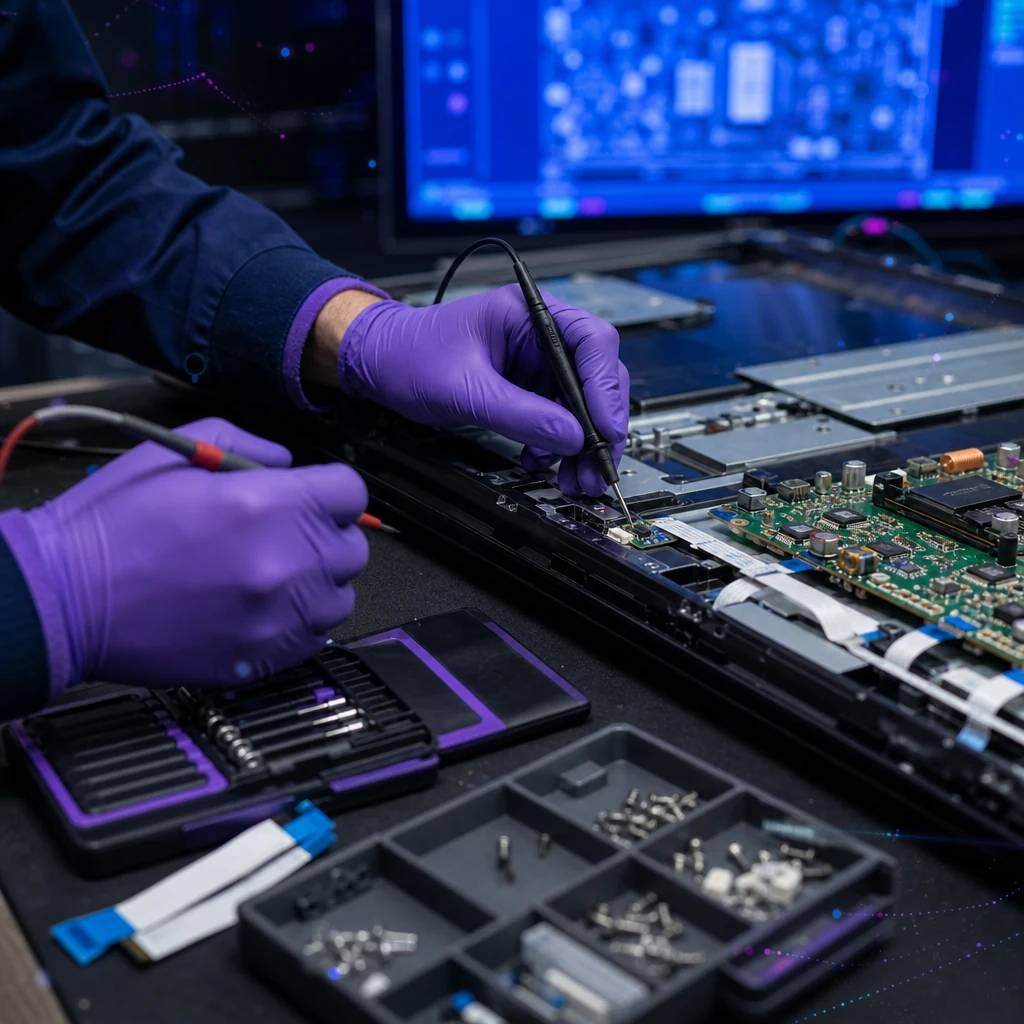
An engineer starts by listening to the symptoms and checking when they appear. For example, lines on every input point to something different from a fault that only appears through one HDMI source.
They will usually assess:
- The model and panel type
- Whether menus and test screens display correctly
- Power supply behaviour and standby status
- Internal boards, connectors and ribbon cables
- Signs of impact, liquid damage or heat stress
Professional diagnosis uses the right equipment, such as multimeters, test patterns and board-level inspection, without guesswork. If you want the set checked properly, trained TV repair engineers can identify whether an OLED TV repair is practical before you consider replacement.
When repair may avoid replacing the whole TV
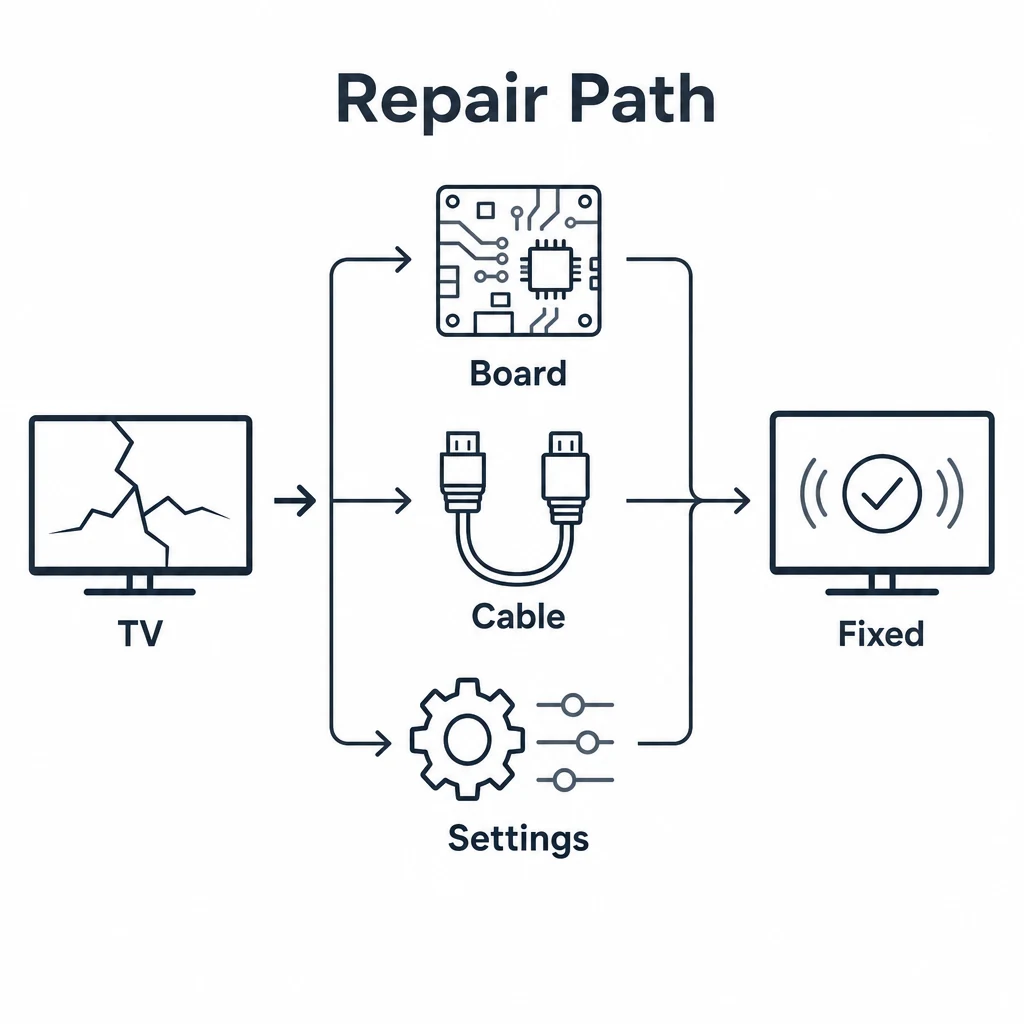
Some issues that look like panel failure are actually caused by supporting electronics. In those cases, replacing or repairing the failed part can restore the picture while keeping the original screen.
Repair may be possible when the problem is linked to:
- A faulty power supply board
- A main board or image processing issue
- Loose or damaged internal connections
- Back-end control electronics
- Software or signal-related problems
This is why it is worth having the television inspected before assuming it is beyond repair. A set with sound but no picture, intermittent flicker or distorted images may still have a good OLED panel, with the fault sitting elsewhere.
When the OLED panel itself is the limiting factor
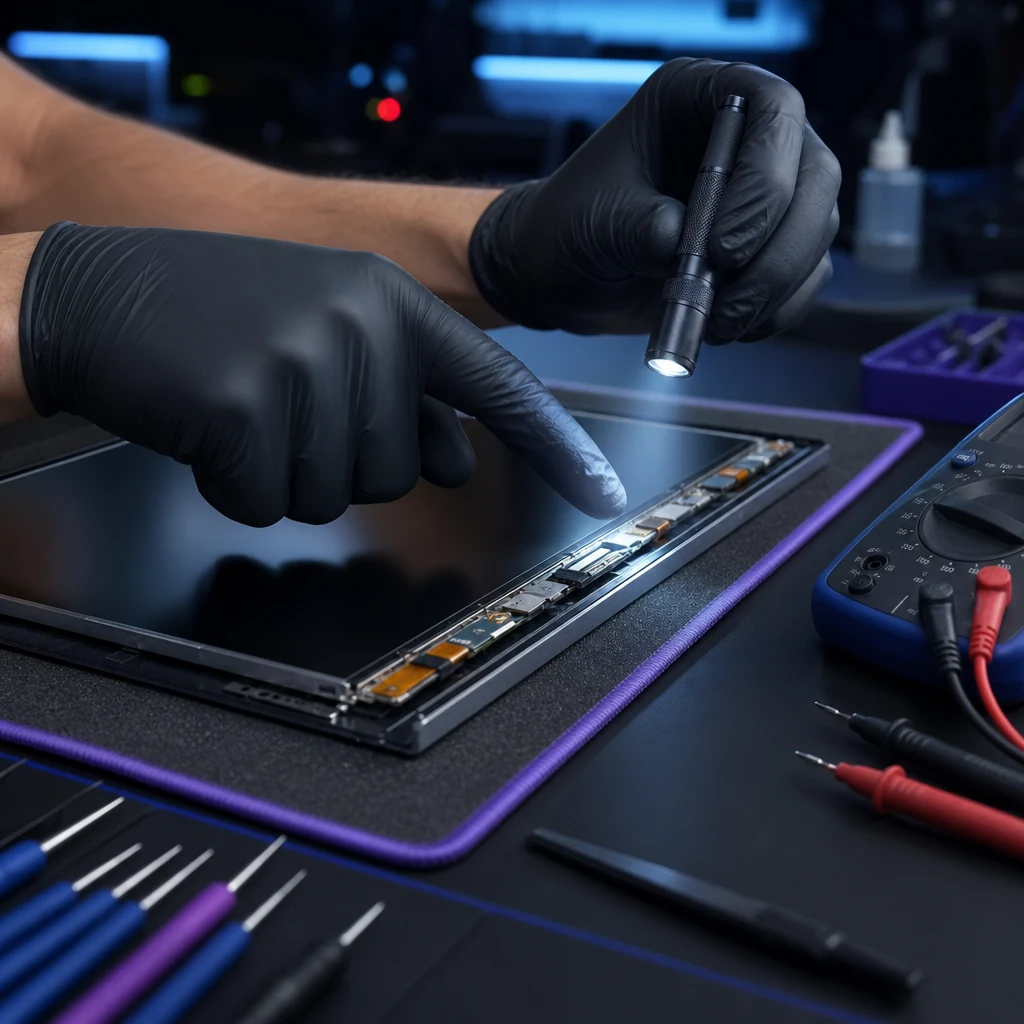
Some faults are rooted in the OLED panel assembly. This is more likely where there is cracked glass, severe impact damage, widespread permanent burn-in, or internal panel failure that cannot be isolated to a separate board or connector.
Examples include:
- Physical cracks across the display
- Permanent logo or menu burn-in
- Panel driver failure built into the screen assembly
In these situations, the engineer will explain the options clearly. Sometimes a panel replacement may be technically possible, but availability and overall suitability need to be considered. The aim is not just to make a repair possible, but to recommend the most sensible route for the customer.
Why professional diagnosis matters with OLED TVs
OLED televisions are delicate inside. The display assembly, ribbon connections and control boards can be damaged by pressure, static or incorrect handling. They also contain internal voltages that should only be dealt with by a competent repair professional.
Good diagnosis also prevents unnecessary part swapping. Rather than assuming the worst, an engineer can confirm whether the screen, board or power section is responsible. For owners searching for OLED TV repairs or TV screen repair, this is the step that gives a clear answer before deciding what to do next.
- A visible OLED screen fault is not always caused by the OLED panel itself.
- Power boards, main boards and internal connections can create picture faults.
- Cracked glass and permanent burn-in are more likely to require panel-level options.
- Professional diagnosis helps avoid unnecessary replacement of the whole TV.
Frequently asked questions
Can an OLED TV with sound but no picture be repaired?
Often, yes. Sound with no picture can point to power, control board or panel drive issues. An engineer can test the set and confirm the cause.
Is OLED burn-in repairable?
Permanent burn-in is usually a panel-level issue. An engineer can check whether it is genuine burn-in or temporary image retention before advising on options.
Do lines on an OLED screen always mean a new TV?
No. Lines can be caused by panel failure, but they may also relate to internal connections or control electronics. Diagnosis is needed to tell the difference.
Should I try to open an OLED TV myself?
No. OLED TVs are delicate and contain internal electrical components. It is safer and more reliable to arrange a professional assessment.
Need an OLED TV fault checked?
If your OLED screen has developed lines, flicker, dark patches or no picture, arrange a professional diagnosis and find out whether repair is possible.